Can a Water Leak Dry On Its Own Without Repairs?
Can a Water Leak Dry On Its Own Without Repairs?
The short answer is no: water can dry, but a leak does not repair itself. A damp baseboard, ceiling stain, cabinet floor, or warm slab area may look better after a few hours or days, especially if the water was shut off. But the cracked pipe, loose fitting, failed wax ring, leaking shower pan, or compromised waterproofing detail is still there.
That distinction matters. Drying removes visible moisture from a surface. Repair stops new water from entering the building material again. If you only wait for the area to dry, the same leak can return the next time the fixture, drain, supply line, or appliance runs.
Why a Leak Can Look Like It Went Away

Leaks often appear to stop for reasons that have nothing to do with the leak being fixed:
- The water supply was shut off or pressure dropped overnight.
- The fixture that triggers the leak has not been used again.
- A drain leak only appears when a sink, tub, shower, or washing machine is running.
- A roof, window, or exterior leak dries after rain stops.
- Air conditioning, fans, or dehumidifiers dry the surface faster than the leak wets it.
- The leak is small enough that moisture is trapped inside the wall, ceiling, cabinet, or slab before it becomes visible.
This is why a dried stain should be treated as evidence, not reassurance. It tells you water was present. It does not prove the source is gone.
What Can Happen If You Wait
Waiting can turn a small leak into a larger repair because building materials hold moisture even after the surface looks dry. Repeated wetting and drying can lead to:
- Mold growth or persistent musty odors.
- Bubbling paint, swollen trim, warped flooring, or soft drywall.
- Rot around cabinets, subfloors, framing, or baseboards.
- Staining that spreads across ceilings or walls.
- Higher water bills from a hidden supply leak.
- More expensive demolition because the wet area expands.
If the leak is under a slab, the symptoms may be even less obvious. A slab leak can show up as a warm floor, unexplained meter movement, a water bill spike, or flooring damage long before you see standing water.
What to Check Before Calling
If it is safe to do so, gather a few clues before the appointment:
- Take photos of the wet area, stains, and any visible dripping.
- Note what was running before the moisture appeared: shower, toilet, washing machine, dishwasher, irrigation, or water heater.
- Check whether the water meter moves when all fixtures are off.
- Mark the edge of a stain or damp area with painter's tape so you can see if it grows.
- Avoid cutting into walls or flooring unless there is an active emergency that requires access.
These details help a technician test the right line or fixture and avoid unnecessary openings.
How Leak Detection Helps When the Area Is Already Dry
Professional leak detection is useful even when the leak is not actively dripping during the visit. Depending on the symptoms, a technician may:
- Pressurize a water line so acoustic equipment can listen for escaping water.
- Run fixtures one at a time to reproduce a drain or shower leak.
- Use moisture meters to map hidden damp areas.
- Use thermal imaging to look for temperature patterns from moisture or hot water.
- Trace the likely pipe path before recommending a targeted repair.
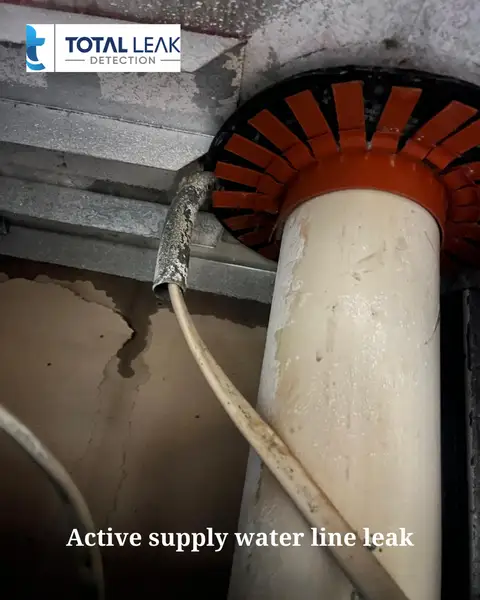
For a pipe burst or active supply leak, detection helps narrow the repair area quickly. For intermittent leaks, it helps connect the symptom to a specific fixture, line, or building component.
When It Is Urgent
Call for help promptly if you notice any of these signs:
- Water meter movement when everything is off.
- Warm flooring or a hot spot that was not there before.
- Damp drywall, cabinets, or flooring that returns after drying.
- Musty odor near a bathroom, kitchen, laundry room, or exterior wall.
- New ceiling stains below a bathroom or air handler.
- Water near electrical outlets, panels, or fixtures.
If water is actively spreading, shut off the affected fixture or main water supply if you can do so safely, then schedule detection and repair.
Summary
No--a water leak does not dry itself into a repair. The wet area may look better, but the source still needs to be located and fixed. If the moisture returns, the meter moves, or the source is hidden, schedule leak detection before opening walls or floors at random.
Frequently Asked Questions
- Can a water leak dry on its own without repairs?
- No. The visible water can evaporate, but the damaged pipe, fitting, fixture, or waterproofing detail remains. The leak can return when water runs again and may cause mold, staining, rot, higher water bills, or structural damage until the source is located and repaired.
- Why would a leak appear to stop?
- A leak may appear to stop when the water is shut off, the line is not being used, pressure changes, weather dries the area, or the leak is intermittent. That does not mean the source has healed.
- What should I do if a wet spot dried up?
- Document the area, check the water meter if it is safe, look for stains or odors, and schedule leak detection if the source is not obvious. Do not open walls or flooring blindly.