Can Leak Detection Identify Old or Inactive Leaks?
Leak detection is easiest when a leak is active. That’s when the tools have a strong signal: sound from escaping water, measurable moisture changes, and temperature differences (especially on hot lines).
But “old” or “inactive” doesn’t automatically mean “impossible.” If you’re dealing with a past leak, a leak that only happens sometimes, or symptoms that come and go, a technician can often still narrow the cause—especially if you prepare the right information and timing.
Why Active Leaks Are Easier to Find
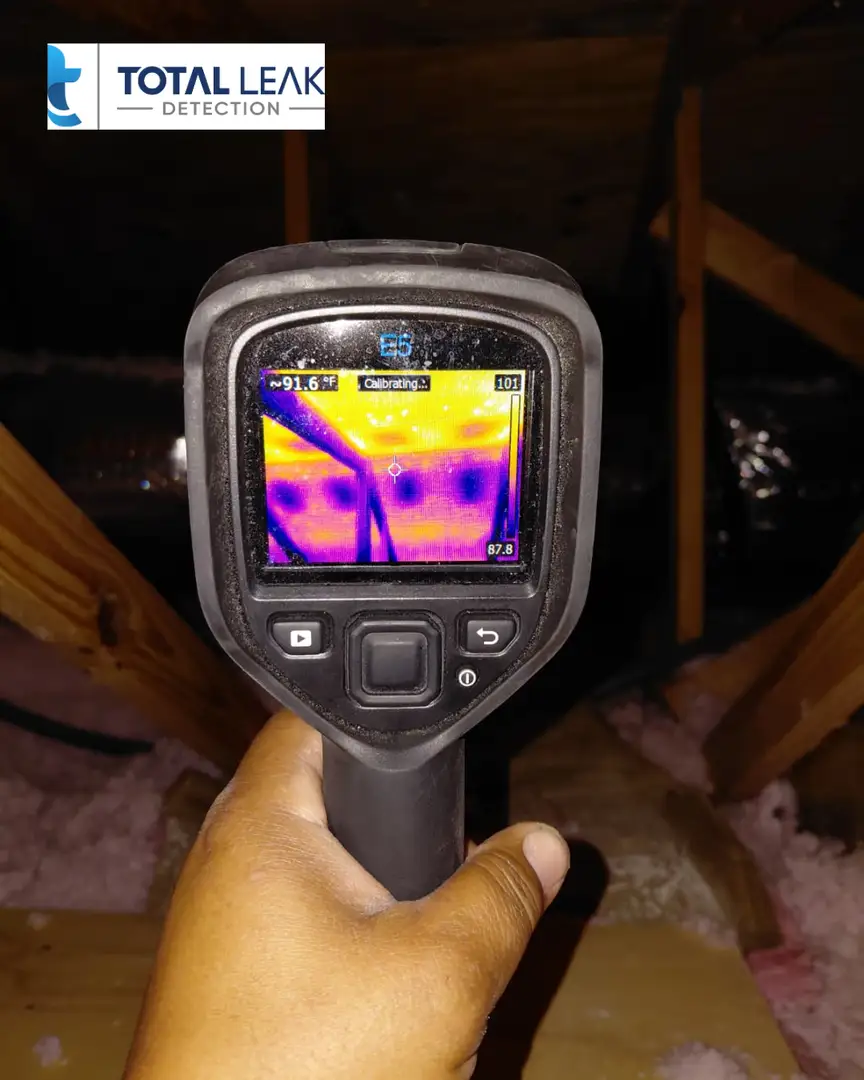
Acoustic leak detection relies on the sound of water escaping from the pipe. When no water is flowing, there is little or no sound to detect. Thermal imaging can show temperature differences caused by moisture or wet materials, so it can sometimes reveal areas where a leak occurred or where moisture remains—but pinpointing the exact break in the pipe is more reliable when water is flowing. Electronic correlators also need an active leak signal to calculate location. For these reasons, technicians prefer to run water to the suspected line during the inspection when possible.

Professional leak detection can still assess slab leak or pipe burst history and recommend next steps. The technician may use thermal imaging to look for residual moisture or stains, and they can advise whether running water to that line would help locate the source. If you had a leak that stopped, schedule an inspection and ask whether reactivating the line is safe and useful for your situation.
What Technicians Do When the Leak Is Inactive
When the leak isn’t currently flowing, technicians typically shift from “pinpoint the sound” to “follow the evidence.” That can include:
- Moisture mapping to see where materials are still wet (or have re-wet)
- Reviewing staining patterns and where damage is newest vs. oldest
- Checking for “on/off” causes (toilets, irrigation, recirculation pumps, appliances)
- Safely running water on suspected lines to recreate the leak condition (when appropriate)
If the symptom is intermittent, part of the job is increasing the chance the leak becomes active during the visit.
Common reasons leaks appear to “stop”
Homeowners often report that a leak “went away.” Common explanations include:
- The home’s water use changed (less pressure/flow for a period)
- A valve was turned off temporarily (toilet, irrigation zone, appliance)
- The leak only happens under certain pressure/temperature conditions (expansion/contraction)
- The water migrated and dried on the surface while still leaking in a hidden cavity
This is why documentation matters—even if the symptom isn’t obvious on inspection day.
Why It Still Matters to Find Old Leak Sources
Even if a leak has stopped, finding the source is important. The pipe or fitting is still damaged; the next time water runs through that line, the leak can start again. Left unrepaired, the same spot can cause repeated water damage, mold, and higher bills. Locating the source—whether the leak is active during the inspection or inferred from moisture and damage—allows you to schedule a single repair and avoid repeated problems. Schedule an inspection so you can get a clear recommendation and plan the repair.
What to Tell the Technician When You Schedule
To improve the odds of a clear result, share:
- When you noticed the issue and whether it’s intermittent
- Any actions that changed symptoms (shutting off irrigation, replacing a toilet flapper, turning off a recirculation pump)
- Photos of fresh staining or moisture when it was active
- Whether the water has been shut off for long periods
If it’s safe to do so, try not to “freeze” the system in a way that makes the leak impossible to reproduce. Your technician can advise whether to run specific fixtures before arrival so the signal is strong enough to detect.
Frequently Asked Questions
- Can leak detection identify old or inactive leaks?
- Leak detection is most accurate when a leak is active. However, technicians can still investigate old or intermittent leaks by analyzing moisture patterns, staining, and by safely re-pressurizing or running water in the suspected line when appropriate.
- Why are inactive leaks harder to locate?
- Many detection tools rely on an active signal—sound from escaping water or a clear temperature/moisture anomaly. If the leak isn’t currently leaking, those signals can be weak or absent.
- Can thermal imaging find an old leak?
- Thermal imaging can sometimes reveal temperature differences caused by wet materials, but it doesn’t “see water” directly. It’s most useful when there’s residual moisture or when a line is actively leaking.
- What should I do if a leak seems intermittent?
- Document when it happens (time of day, which fixtures were used), take photos of new staining, and avoid shutting off water for long periods before the appointment unless you’re preventing damage. The goal is to increase the chance the leak is active during testing.
- Is it still important to find the source of an old leak?
- Yes. If the underlying pipe or fitting wasn’t repaired, the same failure point can reopen under pressure or vibration and cause repeat damage.