Can Thermal Cameras Detect All Types of Water Leaks?
Can Thermal Cameras Detect All Types of Water Leaks?
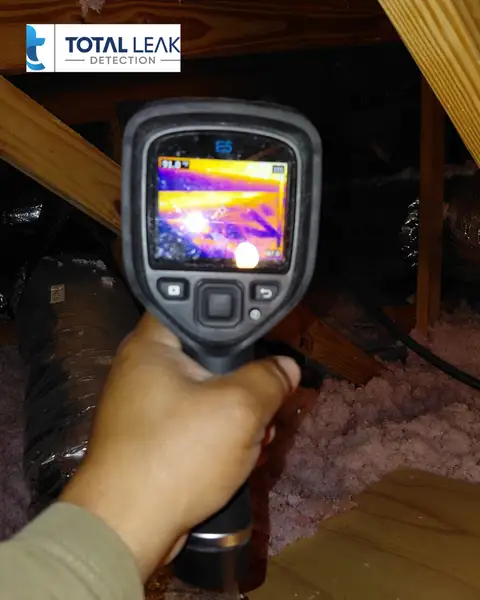
No. Thermal cameras are valuable leak detection tools, but they do not detect every water leak. They read surface temperature differences on floors, walls, ceilings, cabinets, and other materials. When a leak changes the temperature of those surfaces, thermal imaging can reveal a useful pattern. When the leak does not create a clear temperature contrast, another method is needed.
That is why professional leak detection rarely relies on a thermal camera alone. The image is evidence, not the entire diagnosis.
What Thermal Cameras Actually Show

A thermal camera does not see water, mold, pipes, or the inside of a wall. It shows infrared temperature differences on the surface being scanned. A pattern may be caused by:
- Hot water escaping from a pipe and warming a floor or wall.
- Moisture cooling a material as it evaporates.
- Wet insulation, drywall, or flooring holding a different temperature than dry material.
- Air conditioning, sunlight, appliances, exterior heat, or other non-plumbing conditions.
That last point is important. A cold or warm shape on a thermal image does not automatically prove a plumbing leak. It tells the technician where to test more carefully.
Leaks Thermal Imaging Finds Well
Thermal imaging is most useful when the leak produces a strong temperature signature. Common examples include:
- A hot-water slab leak warming one area of tile, wood, or concrete.
- Moisture behind drywall that creates a cooler pattern than the surrounding wall.
- Ceiling stains below a bathroom, laundry room, or air handler where damp material is cooling differently.
- Wet flooring or baseboards where the visible damage has not fully spread yet.
- Larger active leaks where water movement changes the temperature of nearby materials.
In these cases, thermal imaging can quickly narrow the search area before anyone opens a wall or floor.
Leaks Thermal Cameras May Miss
Thermal cameras become less reliable when the leak does not change surface temperature enough to show a pattern. They may miss or understate:
- Small cold-water leaks with little temperature contrast.
- Leaks deep under a thick slab or below multiple finish layers.
- Intermittent leaks that are dry during the inspection.
- Drain leaks that only occur when a fixture is running.
- Water hidden behind insulation, cabinets, or dense materials.
- Moisture patterns confused by sunlight, HVAC airflow, or exterior heat.
For a pipe burst with active water, the thermal camera may show the wet path. For a tiny pinhole leak inside a wall, acoustic listening or moisture mapping may provide better evidence.
Why Professionals Combine Thermal With Other Methods
Professional leak detection uses thermal imaging as part of a larger diagnostic process. Depending on the symptoms, a technician may also use:
- Moisture meters to confirm whether the thermal pattern is actually wet.
- Acoustic listening to hear escaping water from pressurized lines.
- Pressure testing to confirm whether a plumbing system is losing pressure.
- Line tracing to understand where pipes run before repair access is planned.
- Fixture testing to reproduce a shower, tub, toilet, drain, or appliance leak.
Combining methods prevents false assumptions. A thermal image may point to the area; the other tests help confirm the source.
How to Prepare for a Thermal Leak Inspection
You can help the inspection by noting when symptoms appear. Tell the technician if the area gets wet after showers, laundry, rain, irrigation, dishwasher use, or long hot-water runs. If the suspected leak is intermittent, those details can determine which fixture or line should be tested first.
Avoid opening the wall or floor before the inspection unless water is actively spreading and emergency access is needed. Keeping surfaces intact gives thermal imaging, moisture mapping, and acoustic testing more useful context.
Bottom Line
Thermal cameras cannot detect all water leaks because they show temperature patterns, not hidden pipes or water itself. They are excellent for many hot-water leaks and moisture patterns, but cold, small, deep, or intermittent leaks often need additional testing. For the most accurate result, schedule leak detection that combines thermal imaging with moisture, acoustic, pressure, and fixture testing.
Frequently Asked Questions
- Can thermal cameras detect all types of water leaks?
- No. Thermal cameras detect surface temperature differences, not water itself. They work best when a leak creates a clear hot or cool pattern, such as a hot-water slab leak or damp material cooling by evaporation. Small cold-water leaks, deep leaks, and leaks without a temperature contrast may require acoustic, moisture, pressure, or tracer testing.
- Can a thermal camera see through walls?
- No. A thermal camera reads surface temperature on the wall, floor, or ceiling. It may show a pattern caused by moisture or hot water behind the surface, but it does not provide an X-ray view of pipes.
- Why do professionals use thermal imaging with other leak detection tools?
- Thermal imaging shows patterns, while other tools help confirm the source. Acoustic listening, pressure testing, moisture mapping, and line tracing can verify whether the pattern is a plumbing leak, HVAC issue, roof leak, or another source.