Signs Your Home Has a Hidden Slab Leak
Slab leaks happen when a water line under the concrete foundation fails. Because you can’t see the pipe, the “leak” often shows up as indirect symptoms: a bill spike, warm floor spots, or moisture that seems to come from nowhere.
The most important thing to know is this: slab leaks rarely fix themselves. If you catch the signs early, you can usually limit the repair to a targeted access point instead of chasing widespread damage.
Physical Signs Around the Home
Warm spots, dampness, and “mystery moisture”
Warm or damp spots on flooring—especially tile—are classic slab-leak clues. They’re most noticeable with hot-water line leaks, where heat transfers up through the slab and makes a localized area feel warmer than the rest of the floor.
Other physical signs can include:
- Flooring that feels spongy or looks slightly warped/buckled
- Cracked tile or separating grout in a new or expanding pattern
- Persistent dampness near baseboards without a nearby fixture leak
- Efflorescence (white mineral residue) on concrete surfaces in some situations

Cracks: when they matter (and when they don’t)
Slab leaks can contribute to soil movement under a foundation. Over time, that can show up as cracks in tile, drywall, or trim separation. That said, cracks have many causes (settling, temperature changes, poor installation), so don’t assume—confirm with evidence.
Odors and mold conditions
Persistent musty odors can signal moisture trapped under flooring or inside wall cavities. If you smell “damp” but can’t find a visible source, it’s reasonable to consider a slab leak—especially when combined with other signs. Professional leak detection can locate a slab leak without jackhammering the whole floor.
Bills, Sounds, and What to Do Next
Water bill spikes and meter movement
If your usage didn’t change but your bill did, that’s one of the strongest indicators of a supply-side leak. A quick check:
- Turn off all fixtures and water-using appliances.
- Watch your water meter. If it still moves, you likely have a leak.
Running-water sounds when nothing is on
Many homeowners with slab leaks report a faint “hiss” or running-water sound. It may seem like it’s coming from the floor, a wall, or near the water heater line path.
Why it’s risky to wait
Left untreated, slab leaks can worsen and contribute to higher water bills, material damage, and in some cases a pipe burst. The earlier you confirm location, the smaller and cleaner the repair plan tends to be.
What to Do Next
If you suspect a slab leak:
- If there’s active flooding, shut off the main and call for urgent service.
- If there’s no flooding but symptoms are strong, schedule leak detection soon.
- Avoid “exploratory” demolition—especially on slabs—until you have a marked location.
Once the location is confirmed, your plumber can choose the best repair approach (spot repair, reroute, or other solutions based on pipe type and condition).
How Slab Leak Detection Works (No Jackhammering Required)
Many homeowners assume “slab leak = jackhammer the floor.” In reality, modern detection is typically non-invasive first:
- Acoustic detection: listening for the leak sound signal along the slab
- Thermal imaging: identifying temperature anomalies (especially on hot lines)
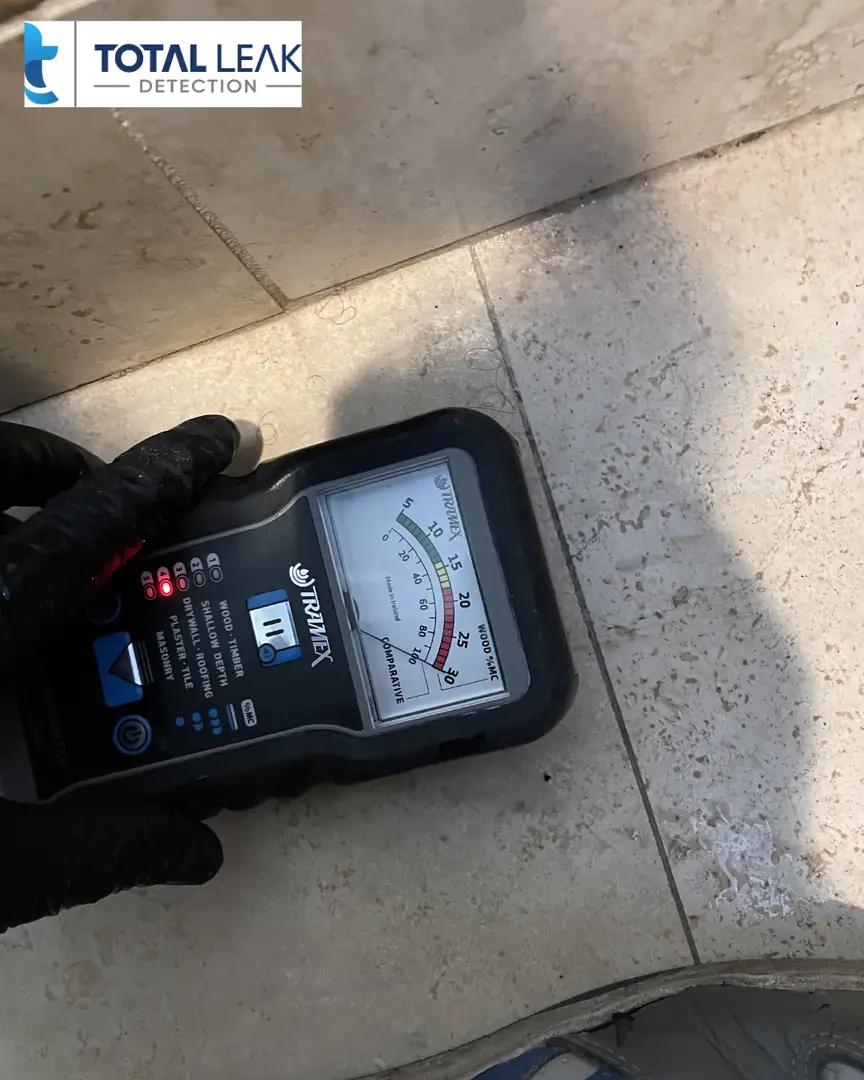
- Moisture mapping: confirming how far moisture has migrated
- Line tracing/correlation (when applicable): narrowing the break location along a run
The goal is to pinpoint the leak closely enough that only one small access area is opened for repair.
Do Not Ignore Early Signs
If you notice warm spots, meter movement, or unexplained moisture, don’t wait for a worst-case scenario. Scheduling professional leak detection early is the simplest way to confirm whether you’re dealing with a slab leak and to keep the repair targeted and predictable.
Frequently Asked Questions
- What are the most common signs of a slab leak?
- The most common signs are warm or damp floor spots, unexplained high water bills, running-water sounds when fixtures are off, and new staining or mildew odors with no visible source.
- Can a slab leak cause cracks in tile or walls?
- It can. Water under a slab can contribute to soil movement and stress that shows up as cracked tile/grout or drywall cracks—though cracks can have other causes, so leak detection is the best way to confirm.
- How can I check for a slab leak at home?
- Start with a water meter test (everything off, see if the meter still moves) and note where warm/damp spots appear. If you have a suspected hot-water slab leak, warm spots often feel localized.
- Do slab leaks require jackhammering to find?
- Not usually. Professional leak detection uses non-invasive methods like acoustic listening and thermal imaging to pinpoint the leak location so only one small area needs to be opened for repair.
- Is a slab leak an emergency?
- If water is actively flooding or the meter is spinning rapidly, treat it as urgent and shut off the main. If there’s no active flooding but you have clear signs, schedule leak detection soon to limit damage.