What Can a Sewer Camera Inspection Actually See?
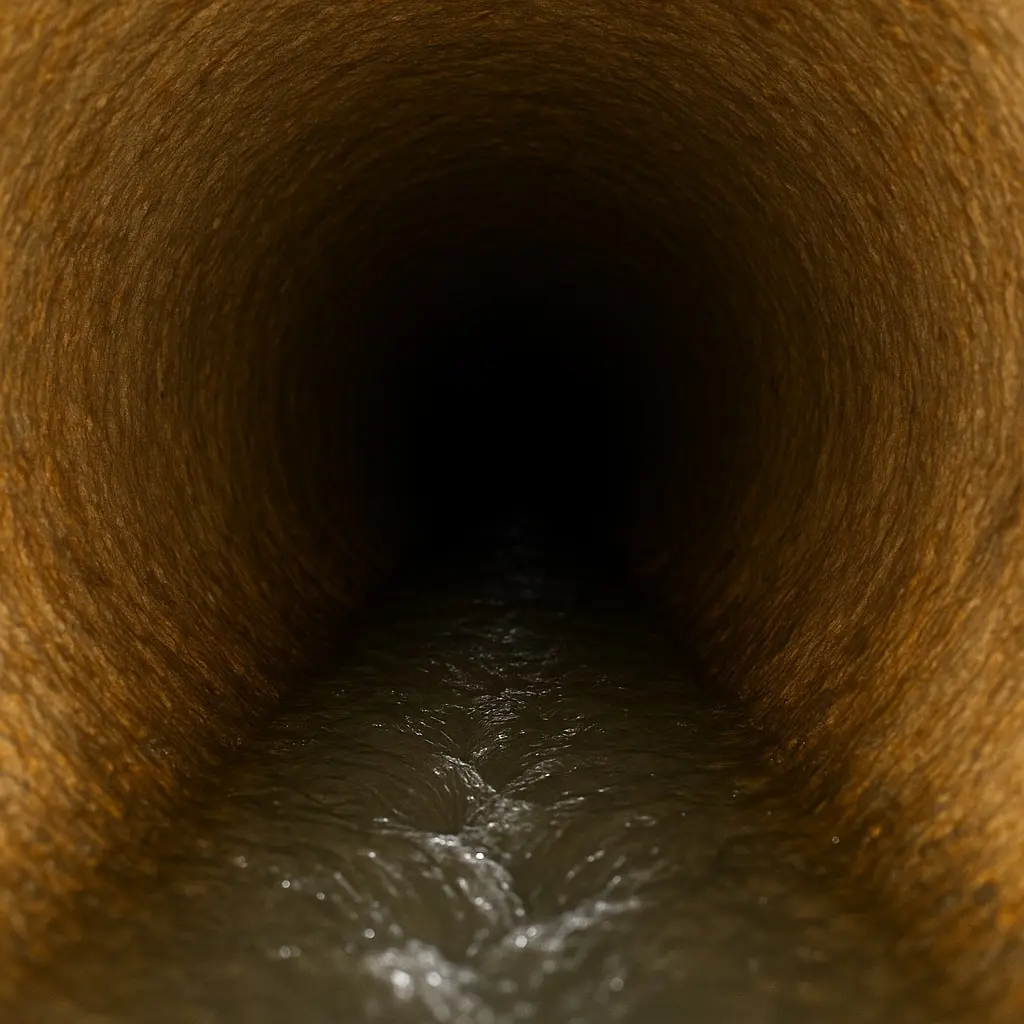
A sewer camera inspection is the closest thing to “X-ray vision” for plumbing—but it’s still a tool with limits. What it does extremely well is show the inside condition of the pipe so you can stop guessing and make a targeted plan.
If you’re dealing with slow drains, backups, odors, or repeated clogs, a camera inspection helps answer three practical questions:
- What’s causing the problem? (roots, grease, collapse, belly, offsets)
- Where is it? (distance from cleanout / approximate location)
- What fix makes sense next? (cleaning vs. repair vs. replacement)
What the Camera Reveals
A small, waterproof camera is fed into the sewer line on a flexible cable, usually through a cleanout or toilet access. The camera sends live video to a monitor, so the technician can see the interior of the pipe as the camera travels. Cracks, breaks, and holes in the pipe wall are visible. Tree roots that have entered through joints or cracks show up clearly—often as dense, hairlike or root-like growth. Blockages—grease, debris, or collapsed pipe—are visible. Offset or separated joints (where two pipe sections have shifted) can be seen. Scale buildup, corrosion, and bellied pipe (sagging sections that hold water) are also detectable. The technician can measure distance from the access point so the location of any problem is documented for repair.

Professional sewer camera inspection helps diagnose root intrusion and pipe collapse before costly repairs. Schedule an inspection if you have slow drains, backups, or odors so you know exactly what is inside the line.
Common defects you’ll see on camera (and what they mean)
Root intrusion
Roots often appear as hair-like strands at joints, then progress into thicker masses. Cleaning can restore flow, but recurrence is common unless the entry point is repaired or managed.
Grease and debris buildup
Grease can coat pipe walls, narrow the opening, and trap debris. Hydro jetting is often more thorough than snaking when pipe condition is good.
Offset joints and separated connections
Even a small misalignment can catch paper and debris. Offset joints often lead to recurring clogs and can be a sign of settlement.
Bellies (sags) holding water
A belly is a low spot where water pools. It can look like the camera is traveling through standing water. Bellies can cause recurring issues that cleaning alone doesn’t permanently solve.
Cracks, holes, and collapse
Cracks may be minor or severe. Collapses or severe deformation are structural problems that typically require repair or replacement.
What the Camera Cannot Do
The camera shows the interior of the pipe; it does not repair the line. If the line is completely blocked or collapsed, the camera may not be able to pass beyond the blockage, so the technician will report what was seen up to that point. The camera also cannot see outside the pipe—for example, it will not show the exact location of the pipe under the ground or whether tree roots are approaching from the outside until they have entered. For repair planning, the distance measurement from the access point helps locate the problem; the technician may need to use that measurement and surface landmarks to guide excavation or repair. Despite these limits, a sewer camera inspection remains the best way to see what is inside the line without digging.
Important limitations to understand
- It can’t see outside the pipe: it won’t show roots “nearby” until they enter.
- It may not pass a hard blockage/collapse: you’ll get findings up to the stopping point.
- Standing water can reduce clarity: bellies or heavy blockage can limit visibility.
- It doesn’t prove slope or depth by itself: locating and grading may require additional tools if a re-route or replacement is planned.
How to use the video/report to avoid wrong repairs
The best outcome of a camera inspection is not just “a video.” It’s a clear decision:
- If the pipe is structurally sound and the issue is buildup → cleaning may be appropriate.
- If there’s a localized structural defect → a spot repair or lining plan may make sense.
- If there’s severe damage or collapse → replacement planning becomes the priority.
If you’re getting multiple bids, share the same footage/report so contractors are pricing the same problem.
When you should schedule a camera inspection
Camera inspections are especially useful when:
- Drains back up repeatedly
- Multiple fixtures are slow at the same time
- You smell sewage odors inside or outside
- You’re buying a home and want to reduce risk
- You’re considering hydro jetting and want to confirm pipe condition first
For a “when to schedule” checklist, see: When a sewer camera inspection is necessary.
Bottom line
A sewer camera inspection shows what’s happening inside the pipe—roots, cracks, offsets, bellies, and blockages—and usually provides distance measurements to target repairs. It can’t fix the problem, and it can’t see outside the pipe, but it’s still the fastest way to replace guesswork with evidence so you can choose the right fix.
Frequently Asked Questions
- What problems can a sewer camera inspection identify?
- Cameras can identify root intrusion, grease/debris blockages, cracks, separated joints, offset joints, bellies, corrosion/scale buildup, and sometimes signs of collapse—depending on how far the camera can travel.
- Can a sewer camera inspection find the exact location of a defect?
- Yes. Most systems measure distance from the entry point so the defect can be located for targeted repair or cleaning.
- What can’t a sewer camera inspection see?
- It can’t see outside the pipe, can’t measure pipe slope precisely without additional tools, and may not pass a fully blocked or collapsed section. It’s diagnostic, not a repair.
- Will the camera always reach the city connection?
- Not always. Heavy blockage, standing water, or collapsed sections can stop the camera early. The technician will document the stopping point and next steps.
- Should I get a camera inspection after hydro jetting or snaking?
- Often, yes—especially for recurring issues. A post-cleaning camera run helps confirm the line is clear and reveals structural defects that cleaning alone can’t fix.