Cast Iron Sewer Warning Signs: When an Older South Florida Home Needs a Camera Inspection
Cast Iron Sewer Warning Signs: When an Older South Florida Home Needs a Camera Inspection

If your home is older and the drains keep acting just bad enough to worry you, the hardest part is usually not noticing the problem. It is deciding whether you are looking at one stubborn fixture clog, a worn-out cast iron line, or a sewer problem that keeps getting temporarily cleared without ever being explained.
That is where a lot of homeowners lose money. They pay for another snaking, another spot fix, or another "let's see if this helps" visit when the real question is bigger: do the symptoms now justify a camera inspection of the main line before anyone recommends the next repair?
For older South Florida homes, that question matters more than it does in many newer properties. Total Leak Detection's sewer camera inspection service and Florida sewer camera guide both point to the same pattern: aging cast iron, recurring clogs, slow drains in more than one fixture, odors, and pre-renovation or pre-purchase uncertainty are exactly the situations where seeing inside the pipe changes the decision.
Here is the short version:
| What you notice | What it may mean | Better next move |
|---|---|---|
| One sink or tub is slow, but everything else is normal | Often a branch-line or local fixture issue | Start with localized drain diagnosis |
| Several fixtures are slow, gurgling, or backing up together | The main sewer line deserves suspicion | Schedule camera-based diagnosis before more guesswork |
| The problem clears briefly, then comes back | Buildup, root intrusion, offset joints, or structural issues may still be there | Stop treating it like a one-time clog |
| You are buying or renovating an older home and do not know line condition | Age and hidden pipe condition create planning risk | Inspect the line before closing or before new finishes go in |
| Sewage is backing up into the home | This is no longer a routine maintenance question | Stop water use and get urgent professional help |
The goal of this article is not to scare you into assuming every older home needs replacement. It is to help you recognize when the symptom pattern has crossed the line from "try a simple drain fix first" to "get eyes inside the pipe before you approve the next step."
When cast iron deserves suspicion in an older South Florida home
Cast iron is not automatically bad just because it is old. But it is one of the pipe materials that deserves more attention in older South Florida homes because age, internal corrosion, and repeating sewer symptoms can stack on each other quietly for years.
Total Leak Detection's sewer camera guide says older Florida properties may still have cast iron, clay, or Orangeburg piping, and it ties inspection demand to Florida-specific conditions such as root intrusion, sandy-soil settling, high water tables, and general age-related deterioration. That does not mean every older line is failing today. It means age alone should make you more careful about trusting a temporary symptom fix as a full diagnosis.
That is the mindset shift many homeowners need:
- age is a risk factor, not a verdict,
- recurring sewer behavior is a clue, not proof of one exact defect,
- and a camera inspection is the step that turns risk plus clues into something concrete enough to plan around.
This is especially useful when the home falls into one of these buckets:
- it was built decades ago and the sewer material is unknown,
- you have already paid for clearing work more than once,
- you are deciding whether to remodel a bathroom or kitchen,
- you are under contract on an older home,
- or you keep hearing phrases like "probably roots," "probably buildup," or "probably old cast iron" without anyone showing you the pipe.
That last point matters. "Probably" is not a repair plan. A camera inspection earns its keep when you need to know whether the line mainly has scale, roots, offsets, bellies, cracks, or larger structural failure before you say yes to jetting, spot repair, lining, or replacement.
Warning signs that point past a one-fixture clog
A cast iron sewer article should not just repeat a generic symptom list. The reader problem is more specific than that: which warning signs suggest this is no longer just one drain acting up?
Total Leak Detection's warning-signs article is useful here because it separates one-fixture problems from broader main-line patterns. The strongest red flags are not "my bathroom sink is slow today." They are things like multiple slow drains, gurgling, recurring backups, odors, wet or sunken yard areas, and symptoms that return after the line was supposedly cleared.

Here are the symptom patterns that usually justify thinking in main-line terms:
Multiple fixtures are involved
If one shower drains slowly but every other drain is fine, that often stays a localized drain problem. If the toilet gurgles when the washer drains, the tub is slow, and another sink has joined the party, the odds shift toward the main line.
The problem keeps coming back after a "fix"
A line that works for a short stretch after snaking and then resumes clogging may still have scale, roots, offsets, or a belly catching waste. Temporary relief is not the same thing as understanding the cause.
You smell sewage or hear pressure changes
Odors, bubbling, and gurgling suggest the system is not venting or draining normally. Those clues do not diagnose cast iron by themselves, but they do say the problem may be bigger than one trap or one branch line.
The yard is telling the same story as the house
Wet, soggy, sunken, or unusually green areas near the sewer path push the investigation out of the walls and into the buried line conversation. That does not always mean a collapsed pipe, but it does mean you should stop assuming the issue is only at a fixture.
The home is older and the symptoms are escalating
A newer PVC line and a 1960s cast iron line can show the same early symptom - slow drainage - but the decision context is different. In an older home, repeated sewer-line symptoms carry more consequence because the material condition is a bigger unknown.
The practical rule is simple: when the pattern is spreading, recurring, or affecting more than one drain, a main-line camera inspection becomes much easier to justify than another round of hopeful clearing.
What a sewer camera inspection can confirm before you approve repairs
Homeowners often hear "you probably need hydro jetting" or "this may be a replacement job" before anyone has explained what the line actually looks like. A sewer camera inspection exists to slow that moment down and replace guesswork with evidence.
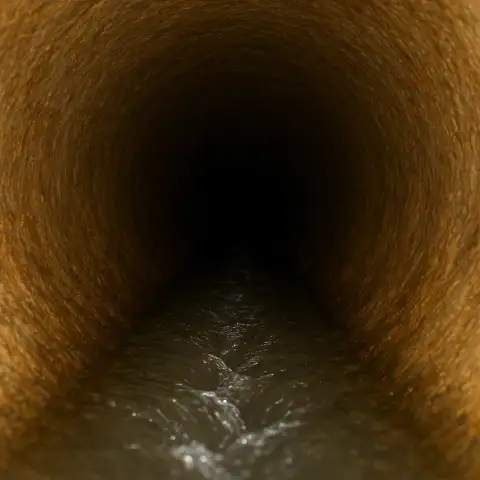
According to TLD's What Can a Sewer Camera Inspection Actually See? article, the camera can reveal roots, grease, offsets, separated joints, bellies, cracks, corrosion, and even collapse. It also usually records distance from the access point, which matters because a repair plan is much better when the defect has a documented location.
What that means in plain English is this:
| Camera finding | Why it matters | What it often changes |
|---|---|---|
| Heavy scale or corrosion but line still open | The line may still be serviceable, but cleaning choices matter | Supports a more informed cleaning or monitoring plan |
| Root intrusion | You are not dealing with a mystery anymore | Helps decide between clearing alone versus addressing the entry point |
| Offset joints or bellies | Recurring clogs may be structural, not just debris-related | Explains why symptoms keep returning |
| Localized crack or damage | A targeted repair may be possible | Prevents oversized work if the defect is contained |
| Collapse or severe deformation | Cleaning alone is not the answer | Moves the conversation toward repair or replacement planning |
Just as important are the limits. TLD's same article says a camera cannot see outside the pipe, may stop at a hard blockage or collapse, and does not automatically pick the repair method for you. That honesty matters. A good sewer camera visit does not promise magic. It gives you a clearer factual base for the next decision.
That is the real value when cast iron is part of the story. The inspection does not tell you that old pipe is bad because it is old. It shows whether this particular line is suffering from buildup, deformation, root intrusion, structural damage, or a mix of several problems.
When a home inspection or another snaking is not enough
A common mistake in older-home transactions is assuming the standard home inspection already answered the sewer question. It usually did not.
InterNACHI's Home Inspection Standards of Practice says inspectors are not required to inspect underground utilities or underground items. That is the key distinction buyers, sellers, and remodel planners often miss. A general home inspection can be excellent at many things while still not being a sewer scope.
So when is that difference important?
Before buying an older home
TLD's sewer camera guide and its article on sewer inspections before buying a home both push the same point: if the home is older, if the sewer material is unknown, or if you are seeing even light warning signs, the due-diligence period is the moment to inspect the line - not the week after closing.
Before major renovations
If you are about to add finishes, rework plumbing, or invest in a bathroom or kitchen remodel, hidden sewer defects become more expensive to discover later. The issue is not only repair cost. It is the cost of tearing through brand-new work because no one checked the buried line first.
After repeated clearing work
Snaking and clearing can be appropriate. But if the line keeps repeating the same story, the question changes from "how do we get flow today?" to "what keeps creating this condition?"
That is where camera work beats another assumption. You stop buying temporary relief as if it were a diagnosis.
When the problem is urgent, not watch-and-wait
Not every cast iron sewer question is a calm planning decision. Some are urgent.
If wastewater is actively backing up into the house, this is not the moment to keep testing fixtures or trying cleaners. EPA's sanitary sewer overflow guidance notes that raw sewage can carry bacteria, viruses, protozoa, worms, molds, and fungi. That is a practical safety reason to stop thinking of the situation as a normal drain inconvenience.
Treat these as same-day problems:
- sewage backing up into tubs, showers, or floor drains,
- multiple fixtures overflowing together,
- contamination spreading into living areas,
- or a yard or slab-area problem that is escalating fast.
In those cases:
- Stop sending more water into the system.
- Keep people and pets away from contaminated areas.
- Do not rely on chemical cleaners to solve a main-line problem.
- Get professional help that can diagnose the line condition directly.
The point of this article is not that every slow drain is an emergency. It is that homeowners should recognize the moment a sewer symptom stops being a maintenance nuisance and becomes a sanitation and property-risk problem.
What to document before scheduling service
The better your symptom record is, the faster a good inspection visit can move from storytelling to useful testing.

Before you schedule, gather:
- which fixtures are affected and which are not,
- whether the issue is slow drainage, odor, gurgling, backup, yard symptoms, or some combination,
- whether the problem returns after prior clearing,
- the rough age of the home or any known history of cast iron piping,
- any invoice or note from previous drain or sewer work,
- and any remodel, purchase, or deadline pressure that changes the urgency.
If you are in a home-buying situation, add:
- whether the property has had backups, odors, or slow drains during showings,
- whether mature trees run near the sewer path,
- and whether you are still inside the contingency window.
If you are planning repairs, ask the inspection provider practical questions up front:
- Will I get video or a written findings report?
- Will the findings identify the likely defect type and approximate location?
- If the camera cannot pass, how will the stopping point be documented?
- Can the same footage be shared with the repair plumber so the bids are based on the same line condition?
Those questions are worth more than asking for one generic price number with no context.
How to use the results to plan the next repair
A sewer camera inspection is not the finish line. It is the decision point that should make the repair stage less wasteful.
Once the line has been viewed, the smarter question becomes: what does this footage justify, and what does it not justify yet?
In many cases, the next move is more limited than homeowners fear:
- If the line is structurally decent and mainly suffering from buildup, cleaning may be the next right step.
- If the line has one localized defect, a targeted repair may make more sense than treating the whole system as failed.
- If the line shows broad deformation, collapse, or severe deterioration, replacement planning may be the honest next conversation.
What you want to avoid is this sequence:
- recurring sewer symptoms,
- repeated temporary clearing,
- no one actually viewing the line,
- then a large repair recommendation with no shared visual evidence.
That sequence leaves homeowners paying for uncertainty.
The better sequence is:
- recognize the symptom pattern,
- inspect the line,
- understand the actual condition,
- then choose cleaning, repair, lining, or replacement based on what the camera found.
If your home is older, the drains are sending mixed signals, or you are about to buy or remodel without a clear sewer picture, that sequence is usually safer and cheaper than another round of guessing. Start with a documented sewer camera inspection so the next repair decision is based on the pipe you actually have, not the one everyone hopes is there.
This article is for general education only, not engineering, health, or legal advice. Pipe materials, access points, and repair scope vary by property, so confirm the next step with a qualified inspection and repair professional before approving invasive work.