What Does a Water Leak Sound Like Inside a Wall?
What Does a Water Leak Sound Like Inside a Wall?
A water leak inside a wall can sound like hissing, dripping, or running water when no faucets or appliances are on. You might hear it at night or when the house is quiet. Recognizing these sounds can help you act before damage becomes obvious.
Common Sounds From a Hidden Leak
The sound of water escaping from a pipe can vary. A small leak in a pressurized line often produces a hiss or whistle—especially if the leak is a pinhole or crack. A drip may be audible as a rhythmic tap or splash if water is hitting a surface. Sometimes you hear what sounds like running water—a continuous flow—when no fixture is in use. You may notice these sounds more at night or when the house is quiet, or when you are near the wall that contains the leaking pipe. Not every leak is loud enough to hear; some are detectable only with professional acoustic equipment.

If you notice these sounds, professional leak detection can pinpoint the source without opening walls. Technicians use acoustic listening devices and correlators to locate the leak so repairs can be limited to a small area. Untreated leaks can lead to slab leak issues or worsen into pipe burst situations. Schedule an inspection to avoid hidden damage.
When You Do Not Hear Anything
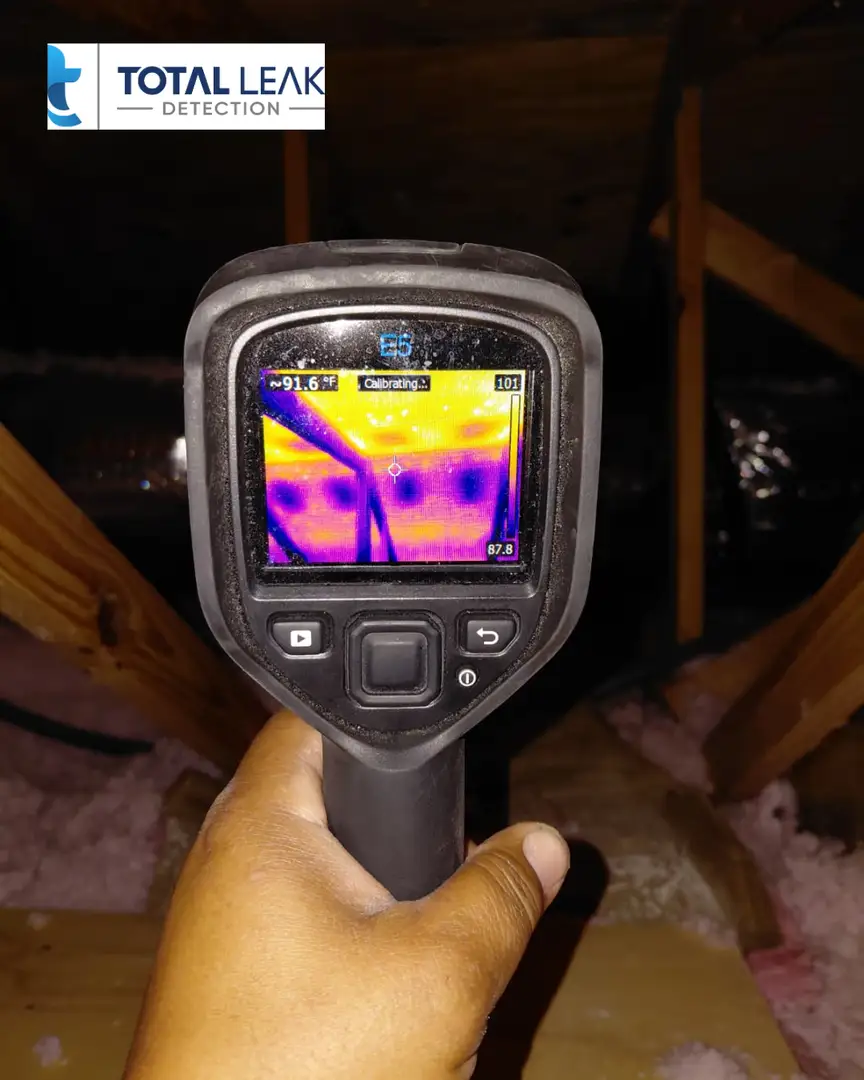
Not every leak is audible. Some leaks are too small or too far inside the wall to produce a sound you can hear. Others are masked by ambient noise. If you have other signs of a leak—unexplained moisture, stains, high water bills, or warm spots—but do not hear anything, that does not mean there is no leak. Professional equipment can detect sounds that the human ear cannot, and technicians can also use thermal imaging or other methods when acoustic detection is not enough. Schedule an inspection based on your signs, not only on whether you hear something.
What Happens After You Report the Sound
When you call professional leak detection and describe where you hear the sound (or which room or wall), the technician will use acoustic equipment—often with you running water to the suspected line—to narrow down the location. They may mark the spot on the wall or floor so that when the plumber opens for repair, the opening can be small and targeted. That reduces the cost and mess of repair and speeds up the fix. Do not open the wall yourself to "look"; without knowing the exact location, you may open the wrong area and still need a professional locate.
Summary
A water leak inside a wall can sound like hissing, dripping, or running water when nothing is on. If you notice these sounds, schedule leak detection to pinpoint the source without opening walls. If you have other signs but do not hear anything, still schedule an inspection—not all leaks are audible.