DIY Leak Detection vs. Professional Services: What Actually Works
DIY Leak Detection vs. Professional Services: What Actually Works
When you suspect a water leak in your home, your first instinct might be to grab a flashlight and start investigating. And in some cases, that's exactly the right approach—not every leak requires professional intervention. But knowing when DIY methods will work and when you need expert help can save you both time and money.
Let's break down the pros and cons of each approach so you can make an informed decision.
What DIY Leak Detection Can Accomplish
There are several leak detection methods any homeowner can perform without special equipment. These work well for identifying obvious leaks and confirming whether a problem exists.
The Water Meter Test
This simple test tells you definitively whether water is escaping somewhere in your system:
- Turn off all water-using appliances and fixtures
- Note the reading on your water meter
- Wait 1-2 hours without using any water
- Check the meter again
If the numbers have changed, you have a leak somewhere. This test confirms a problem exists but won't tell you where.
Visual Inspection
Walk through your home looking for telltale signs:
- Water stains on ceilings or walls
- Peeling paint or bubbling wallpaper
- Warped or discolored flooring
- Mold or mildew growth
- Wet spots or puddles
Best for: Obvious leaks that have already caused visible damage.
The Toilet Dye Test
Add a few drops of food coloring to your toilet tank. Wait 15-30 minutes without flushing. If color appears in the bowl, your flapper valve is leaking.
Best for: Diagnosing running toilets—a common source of high water bills.
Checking Exposed Pipes
Inspect visible plumbing under sinks, around water heaters, and in basements or crawl spaces. Look for:
- Corrosion or rust
- Mineral deposits (white crusty buildup)
- Moisture or water droplets
- Green staining on copper pipes
Best for: Catching leaks in accessible plumbing before they cause damage.
Monitoring Your Water Bill
Compare your monthly water usage to previous months and the same period last year. A significant increase without explanation suggests a leak.
Best for: Early warning that something is wrong, prompting further investigation.
The Limitations of DIY Detection
While these methods are valuable, they have significant limitations:
You Can Confirm a Leak Exists—But Not Where
The water meter test proves water is escaping, but it won't tell you if the leak is under your slab, inside a wall, in your yard, or at a fixture. Without knowing the location, you can't fix it.
Hidden Leaks Stay Hidden
By definition, hidden leaks aren't visible. You might see water stains on a ceiling, but the actual leak could be 10 feet away from where the stain appears—water travels along pipes, beams, and gravity before showing itself.
Damage May Already Be Done
By the time a leak causes visible symptoms like stains or warping, it's often been leaking for weeks or months. You're seeing the result of damage, not catching it early.
Multiple Leaks Can Mask Each Other
Homes can have several small leaks simultaneously. DIY methods might lead you to one obvious problem while others continue undetected.
Some Leaks Are Intermittent
Leaks that only occur under pressure, at certain temperatures, or when specific appliances run are nearly impossible to catch without continuous monitoring equipment.
What Professional Leak Detection Offers
Professional leak detection services use specialized technology that goes far beyond what's possible with DIY methods.
Acoustic Leak Detection
Specialized listening devices amplify the sound of water escaping from pipes. Technicians can literally hear a leak through concrete, walls, and floors—pinpointing the exact location without any demolition.
Best for: Slab leaks, underground pipe leaks, and leaks inside walls.
Thermal Imaging
Infrared cameras detect temperature variations caused by moisture. Water evaporating from a leak creates a cooler spot; hot water line leaks create warmer spots. These temperature differences are invisible to the naked eye but clear on thermal imaging.
Best for: Finding moisture behind walls, under floors, and in ceilings without opening anything up.
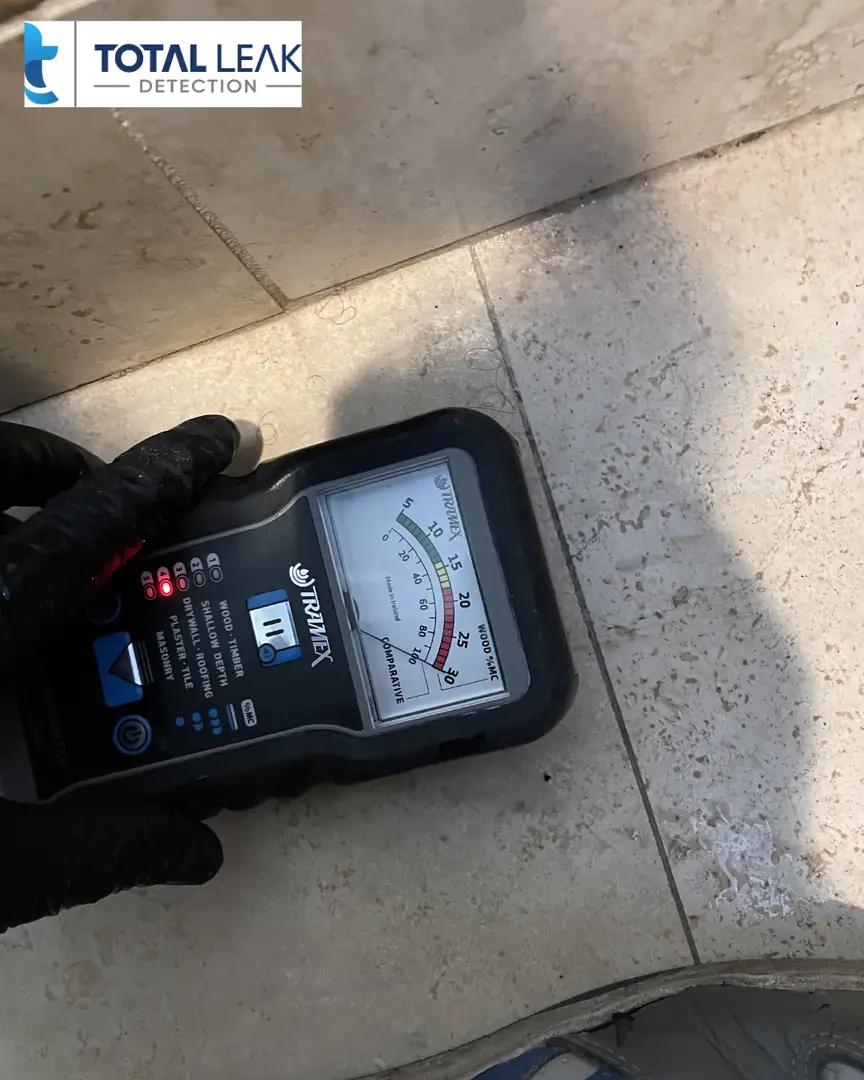
Moisture Meters and Sensors
Professional-grade moisture meters measure dampness levels in building materials with precision. This helps determine the extent of water damage and ensures all affected areas are identified.
Best for: Mapping the full scope of water intrusion and verifying complete drying after repairs.
Video Pipe Inspection
A small camera on a flexible cable is inserted into your plumbing system, providing real-time video of pipe interiors. This reveals cracks, corrosion, root intrusion, and other issues invisible from outside.
Best for: Diagnosing problems inside drain lines, sewer pipes, and supply lines. Learn more about sewer camera inspection.
Pressure Testing
Isolating sections of your plumbing and testing pressure drop can identify which specific line has a leak—even if it's buried or behind walls.
Best for: Narrowing down leak locations in complex plumbing systems.
Cost Comparison: DIY vs. Professional
DIY Costs
- Your time: Several hours of investigation
- Basic tools: Flashlight, food coloring, notepad (minimal cost)
- Potential tools: Moisture meter ($30-$100), but consumer models lack professional accuracy
Total: Essentially free, but limited effectiveness
Professional Leak Detection Costs
- Standard inspection: $150-$500 depending on home size and complexity
- Slab leak detection: May be at the higher end due to specialized equipment needed
- Includes: Detailed report documenting findings, suitable for insurance claims
Total: Investment of a few hundred dollars for accurate, non-invasive detection
The Real Cost Calculation
Consider what happens if you don't find the leak:
- Continued water waste: A hidden leak can waste 10,000+ gallons per year
- Escalating damage: Structural repairs, mold remediation, and flooring replacement can easily exceed $10,000-$50,000
- Mold-related health issues: Especially concerning in Florida's humid climate
The cost of professional detection is minimal compared to the cost of undetected water damage.
When to DIY vs. When to Call a Professional
Handle It Yourself When:
- The leak is visible and accessible (dripping faucet, running toilet)
- You can clearly see the source of water
- It's a simple fixture that you're comfortable repairing
- You're doing routine checks and everything appears normal
Call a Professional When:
- The water meter test shows a leak, but you can't find it
- You see water damage but don't know the source
- You smell mold or mildew but can't see moisture
- Your water bill has increased without explanation
- You have an older home with original plumbing
- The suspected leak is under a slab, in a wall, or underground
- You've already tried DIY methods without success
- You need documentation for an insurance claim
The Best Approach: Combine Both
The most effective strategy uses DIY methods as your first line of defense, with professional services as backup:
-
Perform regular DIY checks — Monthly visual inspections and annual water meter tests catch developing problems early
-
Act on warning signs — Don't ignore increasing water bills, musty odors, or minor stains
-
Call professionals for hidden leaks — When DIY methods confirm a problem but can't locate it, professional detection saves time and prevents unnecessary damage
-
Schedule preventative inspections — Especially before buying a home, after a hurricane, or if your plumbing is over 20 years old
Why Accuracy Matters
The biggest advantage of professional leak detection isn't just finding leaks—it's finding them accurately. Knowing the exact location means:
- Targeted repairs — Only opening up the specific area where the leak is
- Lower repair costs — No exploratory demolition or guesswork
- Faster resolution — Go straight to fixing the problem
- Complete solutions — Ensuring all leaks are found, not just the obvious ones
Guessing wrong about a leak location can mean tearing into walls or floors only to find the problem is somewhere else entirely.
Get Expert Help When You Need It
At Total Leak Detection, we combine advanced technology with experienced technicians to find leaks accurately and non-invasively. Our services are designed to complement your own vigilance—we're here when DIY methods reach their limits.
Whether you've noticed warning signs or simply want peace of mind, professional leak detection provides answers without unnecessary damage to your home.
📞 Call Today: (855) 385-5325
🌐 Learn More: totalleakdetection.com
Frequently Asked Questions
Can I rent professional leak detection equipment?
Some equipment like basic moisture meters can be purchased, but professional acoustic detectors and thermal cameras require training to use effectively. The equipment alone doesn't provide accurate results—expertise in interpreting readings is essential.
How long does professional leak detection take?
Most residential inspections take 1-3 hours depending on home size and the complexity of the issue. Technicians can typically locate a leak and provide a detailed report the same day.
Will leak detection damage my home?
Professional leak detection is non-invasive. The entire point is to locate leaks without cutting into walls or floors. Any necessary access points for repairs are determined only after the leak is accurately located.
What if professionals can't find my leak?
Reputable leak detection services will tell you if they cannot locate a leak and should not charge for inconclusive results. However, with modern equipment, most leaks can be found when they exist.
Should I get leak detection before buying a house?
Absolutely. A pre-purchase leak detection inspection can reveal hidden problems that standard home inspections miss—potentially saving you from buying a property with expensive plumbing issues.
Related Resources
- Signs You Have a Hidden Water Leak - Warning signs every homeowner should know
- Slab Leak Detection Services - Specialized under-foundation leak detection
- How to Check Your Shower Pan for Leaks - DIY shower pan inspection
- Effective Solutions for Low Water Pressure - When pressure drops signal leaks